

Catch up with our online events
Journeys of Hope: The Letters of Meyer and Sonia
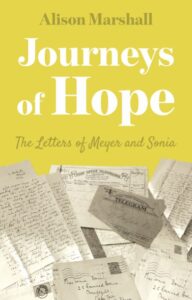
Journeys of Hope: The Letters of Meyer and Sonia is the first-hand story of two people’s emigration journey, told through their original letters. Meyer Fortes and Sonia Donen grew up in a Jewish immigrant community in South Africa, where they met and fell in love. In 1927, Meyer set off, alone, to study in London. Sonia stayed behind in South Africa and they kept up a lively correspondence. Their letters chart their hopes, fears, disappointments and successes, as Meyer struggles to make a life for himself in London and prepare for Sonia’s arrival. Members of both their families had undergone their own journeys, fleeing from danger in the Jewish Pale of Settlement of the Russian Empire. Meyer’s father, Nathan, had first emigrated to Memphis, Tennessee and spent a period of time in Leeds, UK. Meyer’s half-sister, Annie, had recently travelled back to Memphis, having been briefly incarcerated on Ellis Island, USA, and was temporarily separated from her husband. Sonia, herself, had been a refugee from the Russian Civil War that followed the 1917 Russian Revolution. Mixed in with the main plot, is the story of how this history was researched, bringing the author into contact with modern conflicts, the people who are living through them and those who have become refugees
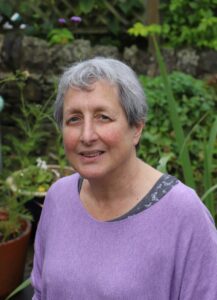
Alison Marshall has spent a career working at the intersection between industry and academia, in product and software development. She is now semi-retired, but still does some part time community development consulting, when not travelling and writing. She is the granddaughter of Meyer and Sonia. This is her first book, which, as well as giving the personal, family, aspects of this story, also describes her travels to the places featured in the story
Mixed
Mixed is Tamar Hodes’ third and latest novel, published in March 2025 by Legend Press. It explores what happens to families when members take different Jewish or non-Jewish routes. Sisters Ruth and Miriam have trod very different paths. Ruth lives in north London, is married to Jewish Simon, their three children go to Jewish schools and and the family is very involved with the shul. Miriam lives in the Midlands, is married to non-Jewish Chris, their children attend a mixed school and Miriam is on the edges of the shul. This causes friction between them and for their long-suffering parents, Harold and Evelyn. Something major happens. Will the family be torn apart or will the sisters put aside their differences for the sake of family harmony? But the novel is not all doom and gloom. There is music, joy, humour and love. Mixed has been longlisted for the Comedy Women in Print award 2025.
Tamar was born in Irsael to South African parents, lived on Hydra for a year with her parents who were part of the artistic community including Leonard Cohen (the subject of her second novel The Water and the Wine) and then came to the UK aged five. She grew up in north London and studied English and Education at Homerton College, Cambridge. She taught English for 35 years and is now retired. Tamar is married with three grandchildren. She lives in Hampshire. Her three novels are Raffy’s Shapes, The Water and the Wine and Mixed. Her stories have been broadcast on Radio 4 and included in anthologies such as A Treasury of Jewish Stories.


A Cool Head in Hell
Harry Silman was a medical officer with the Royal Northumberland Fusiliers in WW2. He served first with the BEF in France and Belgium, and was present at the retreat from Dunkirk. Twenty months later he was one of the many prisoners captured by the Japanese when Singapore fell in 1942. A Cool Head in Hell is based on his objective, often distressing but occasionally humorous diary which recorded the deprivations of Changi camp, the unbelievable hardships for the POWs who built the Thai-Burma railway and the Jewish life that flourished despite it all. Harry describes how he started Friday night services in a variety of makeshift venues, and the inventive ways they celebrated the Festivals.
Harry’s daughter, Jackie Passman, was a teacher of Hebrew & Jewish Studies at Deborah Taylor Nursery school before teaching English and French in mainstream schools. She later retrained to teach deaf children. With her husband Michael, she managed the BHH Synagogue Bookshop for 20 years. She does regular shul and school visits for children and adults learning about Judaism, and gives talks in schools on the Jewish home and way of life. The discovery of her father’s diaries initiated her interest in the war in the Far East in WW2, an area far less well-known than the war in Europe.


Ninette's War: A Jewish Story of Survival in 1940s France
Ninette Dreyfus was a cosseted scion of one of France’s most prominent Jewish families – a cousin to Albert Einstein and family friend to Colette. But when the Second World War broke out and the Germans occupied Paris, the fall was dramatic. Realising that her fate would be transformed, the teenager soon found herself fleeing the capital for the South, only to then fall prey to the Vichy regime. In fear for her life at the hands of the Nazis and their French collaborators, she became somebody else. Woven together from Ninette’s own diaries and interviews with author John Jay before she died, Ninette’s War traces the frailty of national and personal unity through the eyes of a young woman, in compelling and unforgettable detail.


Myra Hess - National Treasure
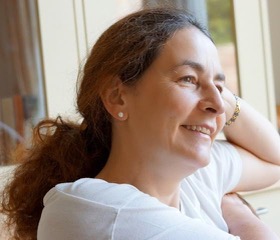
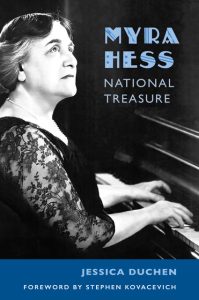
Throughout World War II, Dame Myra Hess, Britain’s greatest concert pianist, ran lunchtime concerts at London’s National Gallery. They became the stuff of legend, proving music’s power to support the human spirit in the darkest of times. This biography, the first in nearly five decades, follows Hess’s transformation from rebellious young musician into inimitably powerful woman and national heroine. Jessica Duchen is a music critic, author and librettist. She grew up in London and studied music at Cambridge, plus piano with Joan Havill. Her previous biographies have included books about Erich Wolfgang Korngold, Gabriel Fauré and the London Chamber Orchestra and she has written seven novels on musical topics, including Beethoven’s Immortal Beloved (Immortal) and the 1930s rediscovery of the Schumann Violin Concerto (Ghost Variations). Her work has appeared in the Times and Sunday Times, the i paper, BBC Music Magazine and specialist periodicals such as Pianist and International Piano. As a librettist she has worked with Roxanna Panufnik on choral pieces, a song cycle and two operas, including the award-winning Dalia for Garsington 2022.
The Gates of Gaza
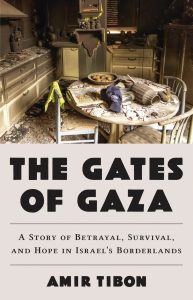
Amir Tibon is an award-winning Israeli journalist and author who writes for Haaretz newspaper. His book The Gates of Gaza, published in September 2024, combines his personal story of surviving the October 7 Hamas attack in southern Israel, with a history of the Israeli-Palestinian conflict and specifically of Israel’s relationship with the people of Gaza. He has previously served as Haaretz‘s diplomatic correspondent and as the paper’s correspondent in Washington. His writing on Israel and the Middle East has appeared in The Atlantic, The New Yorker, Foreign Affairs and other leading publications. He and his wife Miri, together with their two young daughters, are residents of Kibbutz Nahal Oz on Israel’s border with Gaza.

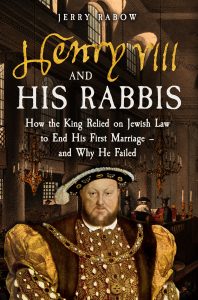
Henry VIII and His Rabbis: How the King Relied on Jewish Law to End His First Marriage – and Why He Failed
Why did it take King Henry VIII six years of conflict (1527–1533) to end his marriage to Catherine of Aragon and marry Anne Boleyn? Henry VIII and His Rabbis tells the vivid story of this tumultuous period in Tudor history, including the first full examination of the king’s bizarre reliance upon rabbinic interpretations of Jewish law for his final campaign to convince the pope to grant a Catholic annulment. With critical analysis of original documents, contemporary accounts, and historical commentaries, Jerry Rabow’s new book makes this engaging history fully accessible for modern readers. In his webinar, Jerry will answer some of the major historical questions raised in his new book, including how Henry could rely on Jewish law in his arguments with the pope when England had been without Jews for hundreds of years. Tudor and Jewish history fans alike will delight in this fascinating intersection of Europe’s Jewish, Catholic, and Protestant worlds of five hundred years ago―a historic moment whose consequences still echo today.
JERRY RABOW, a graduate of Harvard College and Harvard Law School, retired from the practice of law in 1996 to focus on studying, teaching, and writing. He has taught many adult education programs for synagogues, book groups, and other Jewish, legal, and general community organizations, including teaching about topics related to his books at many universities and synagogues. He continues to be active as a member and lay leader of Valley Beth Shalom Synagogue in Encino.

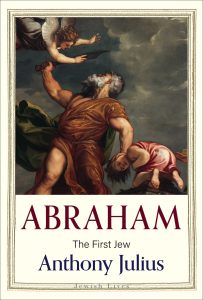
Abraham - The First jew
The story of Abraham, the first Jew, portrayed as two lives lived by one person, paralleling the contradictions in Judaism throughout its history. In this new biography of Abraham – Judaism’s foundational figure – Anthony Julius offers an account of the origins of a fundamental struggle within Judaism between scepticism and faith, critique and affirmation, thinking for oneself and thinking under the direction of another.
Julius describes Abraham’s life as two separate lives, and as a version of the collective life of the Jewish people. Abraham’s first life is an early adulthood of questioning the polytheism of his home city of Ur Kasdim until its ruler, Nimrod, condemns him to death and he is rescued, he believes, by a miracle. In his second life, Abraham’s focus is no longer on critique but rather on conversion and on his leadership over his growing household, until God’s command that he sacrifice his son Isaac. This test, the Akedah (or “Binding”), ends with another miracle, as he believes, but as Julius argues, it is also a catastrophe for Abraham. The Akedah represents for him an unsurpassed horizon—and in Jewish life thereafter. This book focuses on Abraham as leader of the first Jewish project, Judaism, and the unresolvable, insurmountable crisis that the Akedah represents—both in his leadership and in Judaism itself.
ANTHONY JULIUS is Deputy Chairman at the international law firm Mishcon de Reya and holds the Chair in Law and Arts in the Faculty of Laws, UCL. As a lawyer, he is best known for his successful defence of historian Deborah Lipstadt in the libel case brought by David Irving. As a scholar, he is the author of the widely praised Trials of the Diaspora: A History of Anti-Semitism in England, amongst other books.
Forbidden: A 3,000-Year History of Jews and the Pig
A surprising history of how the pig has influenced Jewish identity
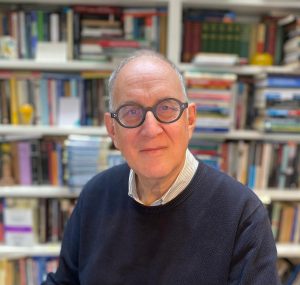
Jews do not eat pig. This (not always true) observation has been made by both Jews and non-Jews for more than three thousand years and is rooted in biblical law. Though the Torah prohibits eating pig meat, it is not singled out more than other food prohibitions. Horses, rabbits, squirrels, and even vultures, while also not kosher, do not inspire the same level of revulsion for Jews as the pig. The pig has become an iconic symbol for people to signal their Jewishness, non-Jewishness, or rebellion from Judaism. There is nothing in the Bible that suggests Jews are meant to embrace this level of pig-phobia.
Starting with the Hebrew Bible, Jordan D. Rosenblum historicizes the emergence of the pig as a key symbol of Jewish identity, from the Roman persecution of ancient rabbis, to the Spanish Inquisition, when so-called Marranos (“Pigs”) converted to Catholicism, to Shakespeare’s writings, to modern memoirs of those leaving Orthodox Judaism. The pig appears in debates about Jewish emancipation in eighteenth-century England and in vaccine conspiracies; in World War II rallying cries, when many American Jewish soldiers were “eating ham for Uncle Sam;” in conversations about pig sandwiches reportedly consumed by Karl Marx; and in recent deliberations about the kosher status of Impossible Pork.
All told, there is a rich and varied story about the associations of Jews and pigs over time, both emerging from within Judaism and imposed on Jews by others. Expansive yet accessible, Forbidden offers a captivating look into Jewish history and identity through the lens of the pig.


Noshtalgia: The Bloom’s Story, 1921-2010
Join us for a fascinating talk with author Pam Fox as she delves into her latest book, Noshtalgia: The Bloom’s Story, 1921-2010. Discover the rich history of Bloom’s, the beloved restaurant and manufacturing firm that became an icon of Jewish cuisine in London. From its humble beginnings to its rise as a celebrated institution, Pam Fox explores the stories, people, and cultural significance behind this legendary establishment. Whether you’re a history buff, a food enthusiast, or simply love a good tale of tradition and transformation, this talk is not to be missed. Come and relive the nostalgia of Bloom’s and its lasting impact on the culinary world.
To buy Noshtalgia: The Bloom’s Story, 1921-2010 click here


The Passover Bunny, Losing the Beer Goddess, and The Argentine Matzah Problem: Seder Gems from Fruits of Freedom, the Torah Flora Hagadah
Dr Jon Greenberg will introduce the Torah Flora biblical and talmudic botany program and Fruits of Freedom, a Passover Hagadah with a commentary from the perspective of the history of Jewish food and agriculture. He will be looking at the importance of beer and bread in ancient Egyptian religion, and how the Ten Plagues and the Exodus discredited this mythology, the real-life Passover bunny, the solution to a collision between science and Torah in an Argentinian matzah bakery, and the heroic determination of our Roman-era ancestors to reconcile Talmudic environmentalism with Passover observance.
Dr. Jon Greenberg, author of TorahFlora.org, received his bachelor’s degree with honors in biology from Brown University and his Master’s and Doctorate in agronomy from Cornell University. He has also studied with Rabbi Chaim Brovender at Israel’s Yeshivat Hamivtar and conducted research on corn, alfalfa, and soybeans at Cornell, the US Department of Agriculture, and the University of Pennsylvania’s Institute for Cancer Research. Since 1989, he has been a science teacher and educational consultant. Dr. Greenberg was Senior Editor of science textbooks at Prentice Hall Publishing Co. Previously on the faculty of Yeshivas Ohr Yosef, the School of Education at Indiana University, and the University of Phoenix, he taught at the Heschel School from 2008 to 2024. In 2021, he published Fruits of Freedom, a Passover Hagadah with a commentary from the perspective of the history of Jewish food and agriculture. He is a frequent speaker at synagogues, schools, and botanical gardens. Dr. Greenberg can be contacted at jon@torahflora.org.


Everyday Jews
‘Can Jews be boring? On the value of everyday Jewishness’
Particularly at this moment, Jews are subject to extraordinary scrutiny and fascination. Our friends and our enemies are in awe of our significance. This intense interest risks ‘hollowing out’ Jewish life so that only our public existence remains. Drawing on his new book Everyday Jews: Why the Jewish people are not who you think they are , Keith Kahn-Harris will make the case for Jews embracing their mundane, parochial and ‘everyday’ side. Jews can be as boring as anyone else and, right now, non-Jews need to be confronted with this side of Jewish existence
‘Dr Keith Kahn-Harris is a sociologist and writer. He is a Senior Research Fellow at the Institute for Jewish Policy Research and a Senior Lecturer at Leo Baeck College. Everyday Jews is his ninth book


In Conversation with Lord Mann of Holbeck Moor HM Government’s Independent Adviser on Antisemitism
January 2025 marked a significant milestone with the launch of the Board of Deputies’ Commission on Antisemitism, a vital initiative addressing one of the most pressing issues of our time. We are delighted to announce that one of its Chairs, Lord John Mann, will return to Milim for an insightful evening of discussion.
Join us as Lord Mann, HM Government’s Independent Adviser on Antisemitism, and Simon Myerson KC, Chair of the Leeds Jewish Representative Council, explore the work of this landmark commission. Together, they will delve into the ongoing efforts to combat antisemitism, the challenges faced by communities today, and the importance of education and advocacy in fostering a safer and more inclusive society.
Lord Mann is a powerful voice in the fight against antisemitism, and his commitment to tackling prejudice is unwavering. Don’t miss this unique opportunity to hear firsthand about the vital work being undertaken and engage in a conversation about some of the most pressing issues of our time.

Mindele’s Journey: A Memoir of a Hidden Child of the Holocaust
Giving a voice to those who were silenced. Brooklyn, N.Y. – Nicknamed “the wanderer” Mariette Bermowitz, author of “Mindele’s Journey: Memoir of a Hidden Child of the Holocaust” writes for us and for herself, her need to hold onto treasured fragments of her past.
The refrain, “Do you remember?” fills the pages as Mariette wanders, flees and returns to so many lives: as a Jewish child, as a Catholic, as a free-spirit in Brooklyn, as a wife, girlfriend, daughter. In 1942 when Mindele was four years old her mother and four siblings were deported to concentration camps while she was miraculously rescued and placed in a convent, then spent the remaining war years with a family in the Belgian countryside. When her father returned to claim her, she no longer recognized him. Living in post war Brussels, a world filled with despair for the Jews who survived, was when “the war after the war” began for her.
“My story is a testament to a guiding force instilled in me by the nuns who sheltered me during the war,” Bermowitz says. “I know what it’s like to give up hope, but something always drove me on”


Managing the Bad Boys of Snooker: Jimmy White and Alex Higgins ( and a lot more)
For Harvey Lisberg the best rewards of writing his memoir “I’m Into Something Good” and later reformatting it for the niche excerpt ‘Managing the Bad Boys of Snooker’ were the wonderful reviews, podcasts, personal appearances, and broadcasts, and then rekindling old friendships as a result.
As Harvey says: “Now, I am in daily contact with Jimmy White and share a weekly football bet with him on the understanding it is the only betting we do; we are born again recovering gamblers! Jimmy asked me to negotiate a film deal for his upcoming biopic starring Ray Winston which may be bittersweet as I spent a considerable amount of time on lyrics to a new song. “Jimmy, Jimmy White” I love that song . It has been great reconnecting with Jimmy because I get to re-live the ‘snooker years’.
The snooker players (Jimmy White & Alex Higgins) were way more rock ‘n roll than the rock ‘n roll stars (Herman’s Hermits &10cc) and there’s huge irony in that but it true! Some of the stories are just irresistible so I decided to write them into a book – enjoy!”


Journeys of Hope: The Letters of Meyer and Sonia
Journeys of Hope: The Letters of Meyer and Sonia is the first-hand story of two people’s emigration journey, told through their original letters. Meyer Fortes and Sonia Donen grew up in a Jewish immigrant community in South Africa, where they met and fell in love. In 1927, Meyer set off, alone, to study in London. Sonia stayed behind in South Africa and they kept up a lively correspondence. Their letters chart their hopes, fears, disappointments and successes, as Meyer struggles to make a life for himself in London and prepare for Sonia’s arrival. Members of both their families had undergone their own journeys, fleeing from danger in the Jewish Pale of Settlement of the Russian Empire. Meyer’s father, Nathan, had first emigrated to Memphis, Tennessee and spent a period of time in Leeds, UK. Meyer’s half-sister, Annie, had recently travelled back to Memphis, having been briefly incarcerated on Ellis Island, USA, and was temporarily separated from her husband. Sonia, herself, had been a refugee from the Russian Civil War that followed the 1917 Russian Revolution. Mixed in with the main plot, is the story of how this history was researched, bringing the author into contact with modern conflicts, the people who are living through them and those who have become refugees
Alison Marshall has spent a career working at the intersection between industry and academia, in product and software development. She is now semi-retired, but still does some part time community development consulting, when not travelling and writing. She is the granddaughter of Meyer and Sonia. This is her first book, which, as well as giving the personal, family, aspects of this story, also describes her travels to the places featured in the story
Mixed
Mixed is Tamar Hodes’ third and latest novel, published in March 2025 by Legend Press. It explores what happens to families when members take different Jewish or non-Jewish routes. Sisters Ruth and Miriam have trod very different paths. Ruth lives in north London, is married to Jewish Simon, their three children go to Jewish schools and and the family is very involved with the shul. Miriam lives in the Midlands, is married to non-Jewish Chris, their children attend a mixed school and Miriam is on the edges of the shul. This causes friction between them and for their long-suffering parents, Harold and Evelyn. Something major happens. Will the family be torn apart or will the sisters put aside their differences for the sake of family harmony? But the novel is not all doom and gloom. There is music, joy, humour and love. Mixed has been longlisted for the Comedy Women in Print award 2025.
Tamar was born in Irsael to South African parents, lived on Hydra for a year with her parents who were part of the artistic community including Leonard Cohen (the subject of her second novel The Water and the Wine) and then came to the UK aged five. She grew up in north London and studied English and Education at Homerton College, Cambridge. She taught English for 35 years and is now retired. Tamar is married with three grandchildren. She lives in Hampshire. Her three novels are Raffy’s Shapes, The Water and the Wine and Mixed. Her stories have been broadcast on Radio 4 and included in anthologies such as A Treasury of Jewish Stories.
A Cool Head in Hell
Harry Silman was a medical officer with the Royal Northumberland Fusiliers in WW2. He served first with the BEF in France and Belgium, and was present at the retreat from Dunkirk. Twenty months later he was one of the many prisoners captured by the Japanese when Singapore fell in 1942. A Cool Head in Hell is based on his objective, often distressing but occasionally humorous diary which recorded the deprivations of Changi camp, the unbelievable hardships for the POWs who built the Thai-Burma railway and the Jewish life that flourished despite it all. Harry describes how he started Friday night services in a variety of makeshift venues, and the inventive ways they celebrated the Festivals.
Harry’s daughter, Jackie Passman, was a teacher of Hebrew & Jewish Studies at Deborah Taylor Nursery school before teaching English and French in mainstream schools. She later retrained to teach deaf children. With her husband Michael, she managed the BHH Synagogue Bookshop for 20 years. She does regular shul and school visits for children and adults learning about Judaism, and gives talks in schools on the Jewish home and way of life. The discovery of her father’s diaries initiated her interest in the war in the Far East in WW2, an area far less well-known than the war in Europe.
Ninette's War: A Jewish Story of Survival in 1940s France
Ninette Dreyfus was a cosseted scion of one of France’s most prominent Jewish families – a cousin to Albert Einstein and family friend to Colette. But when the Second World War broke out and the Germans occupied Paris, the fall was dramatic. Realising that her fate would be transformed, the teenager soon found herself fleeing the capital for the South, only to then fall prey to the Vichy regime. In fear for her life at the hands of the Nazis and their French collaborators, she became somebody else. Woven together from Ninette’s own diaries and interviews with author John Jay before she died, Ninette’s War traces the frailty of national and personal unity through the eyes of a young woman, in compelling and unforgettable detail.
Myra Hess - National Treasure
Throughout World War II, Dame Myra Hess, Britain’s greatest concert pianist, ran lunchtime concerts at London’s National Gallery. They became the stuff of legend, proving music’s power to support the human spirit in the darkest of times. This biography, the first in nearly five decades, follows Hess’s transformation from rebellious young musician into inimitably powerful woman and national heroine. Jessica Duchen is a music critic, author and librettist. She grew up in London and studied music at Cambridge, plus piano with Joan Havill. Her previous biographies have included books about Erich Wolfgang Korngold, Gabriel Fauré and the London Chamber Orchestra and she has written seven novels on musical topics, including Beethoven’s Immortal Beloved (Immortal) and the 1930s rediscovery of the Schumann Violin Concerto (Ghost Variations). Her work has appeared in the Times and Sunday Times, the i paper, BBC Music Magazine and specialist periodicals such as Pianist and International Piano. As a librettist she has worked with Roxanna Panufnik on choral pieces, a song cycle and two operas, including the award-winning Dalia for Garsington 2022.
The Gates of Gaza
Amir Tibon is an award-winning Israeli journalist and author who writes for Haaretz newspaper. His book The Gates of Gaza, published in September 2024, combines his personal story of surviving the October 7 Hamas attack in southern Israel, with a history of the Israeli-Palestinian conflict and specifically of Israel’s relationship with the people of Gaza. He has previously served as Haaretz‘s diplomatic correspondent and as the paper’s correspondent in Washington. His writing on Israel and the Middle East has appeared in The Atlantic, The New Yorker, Foreign Affairs and other leading publications. He and his wife Miri, together with their two young daughters, are residents of Kibbutz Nahal Oz on Israel’s border with Gaza.
Henry VIII and His Rabbis: How the King Relied on Jewish Law to End His First Marriage – and Why He Failed
Why did it take King Henry VIII six years of conflict (1527–1533) to end his marriage to Catherine of Aragon and marry Anne Boleyn? Henry VIII and His Rabbis tells the vivid story of this tumultuous period in Tudor history, including the first full examination of the king’s bizarre reliance upon rabbinic interpretations of Jewish law for his final campaign to convince the pope to grant a Catholic annulment. With critical analysis of original documents, contemporary accounts, and historical commentaries, Jerry Rabow’s new book makes this engaging history fully accessible for modern readers. In his webinar, Jerry will answer some of the major historical questions raised in his new book, including how Henry could rely on Jewish law in his arguments with the pope when England had been without Jews for hundreds of years. Tudor and Jewish history fans alike will delight in this fascinating intersection of Europe’s Jewish, Catholic, and Protestant worlds of five hundred years ago―a historic moment whose consequences still echo today.
JERRY RABOW, a graduate of Harvard College and Harvard Law School, retired from the practice of law in 1996 to focus on studying, teaching, and writing. He has taught many adult education programs for synagogues, book groups, and other Jewish, legal, and general community organizations, including teaching about topics related to his books at many universities and synagogues. He continues to be active as a member and lay leader of Valley Beth Shalom Synagogue in Encino.
Abraham - The First jew
The story of Abraham, the first Jew, portrayed as two lives lived by one person, paralleling the contradictions in Judaism throughout its history. In this new biography of Abraham – Judaism’s foundational figure – Anthony Julius offers an account of the origins of a fundamental struggle within Judaism between scepticism and faith, critique and affirmation, thinking for oneself and thinking under the direction of another.
Julius describes Abraham’s life as two separate lives, and as a version of the collective life of the Jewish people. Abraham’s first life is an early adulthood of questioning the polytheism of his home city of Ur Kasdim until its ruler, Nimrod, condemns him to death and he is rescued, he believes, by a miracle. In his second life, Abraham’s focus is no longer on critique but rather on conversion and on his leadership over his growing household, until God’s command that he sacrifice his son Isaac. This test, the Akedah (or “Binding”), ends with another miracle, as he believes, but as Julius argues, it is also a catastrophe for Abraham. The Akedah represents for him an unsurpassed horizon—and in Jewish life thereafter. This book focuses on Abraham as leader of the first Jewish project, Judaism, and the unresolvable, insurmountable crisis that the Akedah represents—both in his leadership and in Judaism itself.
ANTHONY JULIUS is Deputy Chairman at the international law firm Mishcon de Reya and holds the Chair in Law and Arts in the Faculty of Laws, UCL. As a lawyer, he is best known for his successful defence of historian Deborah Lipstadt in the libel case brought by David Irving. As a scholar, he is the author of the widely praised Trials of the Diaspora: A History of Anti-Semitism in England, amongst other books.
Forbidden: A 3,000-Year History of Jews and the Pig
A surprising history of how the pig has influenced Jewish identity
Jews do not eat pig. This (not always true) observation has been made by both Jews and non-Jews for more than three thousand years and is rooted in biblical law. Though the Torah prohibits eating pig meat, it is not singled out more than other food prohibitions. Horses, rabbits, squirrels, and even vultures, while also not kosher, do not inspire the same level of revulsion for Jews as the pig. The pig has become an iconic symbol for people to signal their Jewishness, non-Jewishness, or rebellion from Judaism. There is nothing in the Bible that suggests Jews are meant to embrace this level of pig-phobia.
Starting with the Hebrew Bible, Jordan D. Rosenblum historicizes the emergence of the pig as a key symbol of Jewish identity, from the Roman persecution of ancient rabbis, to the Spanish Inquisition, when so-called Marranos (“Pigs”) converted to Catholicism, to Shakespeare’s writings, to modern memoirs of those leaving Orthodox Judaism. The pig appears in debates about Jewish emancipation in eighteenth-century England and in vaccine conspiracies; in World War II rallying cries, when many American Jewish soldiers were “eating ham for Uncle Sam;” in conversations about pig sandwiches reportedly consumed by Karl Marx; and in recent deliberations about the kosher status of Impossible Pork.
All told, there is a rich and varied story about the associations of Jews and pigs over time, both emerging from within Judaism and imposed on Jews by others. Expansive yet accessible, Forbidden offers a captivating look into Jewish history and identity through the lens of the pig.
Noshtalgia: The Bloom’s Story, 1921-2010
Join us for a fascinating talk with author Pam Fox as she delves into her latest book, Noshtalgia: The Bloom’s Story, 1921-2010. Discover the rich history of Bloom’s, the beloved restaurant and manufacturing firm that became an icon of Jewish cuisine in London. From its humble beginnings to its rise as a celebrated institution, Pam Fox explores the stories, people, and cultural significance behind this legendary establishment. Whether you’re a history buff, a food enthusiast, or simply love a good tale of tradition and transformation, this talk is not to be missed. Come and relive the nostalgia of Bloom’s and its lasting impact on the culinary world.
To buy Noshtalgia: The Bloom’s Story, 1921-2010 click here
The Passover Bunny, Losing the Beer Goddess, and The Argentine Matzah Problem: Seder Gems from Fruits of Freedom, the Torah Flora Hagadah
Dr Jon Greenberg will introduce the Torah Flora biblical and talmudic botany program and Fruits of Freedom, a Passover Hagadah with a commentary from the perspective of the history of Jewish food and agriculture. He will be looking at the importance of beer and bread in ancient Egyptian religion, and how the Ten Plagues and the Exodus discredited this mythology, the real-life Passover bunny, the solution to a collision between science and Torah in an Argentinian matzah bakery, and the heroic determination of our Roman-era ancestors to reconcile Talmudic environmentalism with Passover observance.
Dr. Jon Greenberg, author of TorahFlora.org, received his bachelor’s degree with honors in biology from Brown University and his Master’s and Doctorate in agronomy from Cornell University. He has also studied with Rabbi Chaim Brovender at Israel’s Yeshivat Hamivtar and conducted research on corn, alfalfa, and soybeans at Cornell, the US Department of Agriculture, and the University of Pennsylvania’s Institute for Cancer Research. Since 1989, he has been a science teacher and educational consultant. Dr. Greenberg was Senior Editor of science textbooks at Prentice Hall Publishing Co. Previously on the faculty of Yeshivas Ohr Yosef, the School of Education at Indiana University, and the University of Phoenix, he taught at the Heschel School from 2008 to 2024. In 2021, he published Fruits of Freedom, a Passover Hagadah with a commentary from the perspective of the history of Jewish food and agriculture. He is a frequent speaker at synagogues, schools, and botanical gardens. Dr. Greenberg can be contacted at jon@torahflora.org.
Everyday Jews
‘Can Jews be boring? On the value of everyday Jewishness’
Particularly at this moment, Jews are subject to extraordinary scrutiny and fascination. Our friends and our enemies are in awe of our significance. This intense interest risks ‘hollowing out’ Jewish life so that only our public existence remains. Drawing on his new book Everyday Jews: Why the Jewish people are not who you think they are , Keith Kahn-Harris will make the case for Jews embracing their mundane, parochial and ‘everyday’ side. Jews can be as boring as anyone else and, right now, non-Jews need to be confronted with this side of Jewish existence
‘Dr Keith Kahn-Harris is a sociologist and writer. He is a Senior Research Fellow at the Institute for Jewish Policy Research and a Senior Lecturer at Leo Baeck College. Everyday Jews is his ninth book
In Conversation with Lord Mann of Holbeck Moor HM Government’s Independent Adviser on Antisemitism
January 2025 marked a significant milestone with the launch of the Board of Deputies’ Commission on Antisemitism, a vital initiative addressing one of the most pressing issues of our time. We are delighted to announce that one of its Chairs, Lord John Mann, will return to Milim for an insightful evening of discussion.
Join us as Lord Mann, HM Government’s Independent Adviser on Antisemitism, and Simon Myerson KC, Chair of the Leeds Jewish Representative Council, explore the work of this landmark commission. Together, they will delve into the ongoing efforts to combat antisemitism, the challenges faced by communities today, and the importance of education and advocacy in fostering a safer and more inclusive society.
Lord Mann is a powerful voice in the fight against antisemitism, and his commitment to tackling prejudice is unwavering. Don’t miss this unique opportunity to hear firsthand about the vital work being undertaken and engage in a conversation about some of the most pressing issues of our time.
Mindele’s Journey: A Memoir of a Hidden Child of the Holocaust
Giving a voice to those who were silenced. Brooklyn, N.Y. – Nicknamed “the wanderer” Mariette Bermowitz, author of “Mindele’s Journey: Memoir of a Hidden Child of the Holocaust” writes for us and for herself, her need to hold onto treasured fragments of her past.
The refrain, “Do you remember?” fills the pages as Mariette wanders, flees and returns to so many lives: as a Jewish child, as a Catholic, as a free-spirit in Brooklyn, as a wife, girlfriend, daughter. In 1942 when Mindele was four years old her mother and four siblings were deported to concentration camps while she was miraculously rescued and placed in a convent, then spent the remaining war years with a family in the Belgian countryside. When her father returned to claim her, she no longer recognized him. Living in post war Brussels, a world filled with despair for the Jews who survived, was when “the war after the war” began for her.
“My story is a testament to a guiding force instilled in me by the nuns who sheltered me during the war,” Bermowitz says. “I know what it’s like to give up hope, but something always drove me on”
Managing the Bad Boys of Snooker: Jimmy White and Alex Higgins ( and a lot more)
For Harvey Lisberg the best rewards of writing his memoir “I’m Into Something Good” and later reformatting it for the niche excerpt ‘Managing the Bad Boys of Snooker’ were the wonderful reviews, podcasts, personal appearances, and broadcasts, and then rekindling old friendships as a result.
As Harvey says: “Now, I am in daily contact with Jimmy White and share a weekly football bet with him on the understanding it is the only betting we do; we are born again recovering gamblers! Jimmy asked me to negotiate a film deal for his upcoming biopic starring Ray Winston which may be bittersweet as I spent a considerable amount of time on lyrics to a new song. “Jimmy, Jimmy White” I love that song . It has been great reconnecting with Jimmy because I get to re-live the ‘snooker years’.
The snooker players (Jimmy White & Alex Higgins) were way more rock ‘n roll than the rock ‘n roll stars (Herman’s Hermits &10cc) and there’s huge irony in that but it true! Some of the stories are just irresistible so I decided to write them into a book – enjoy!”